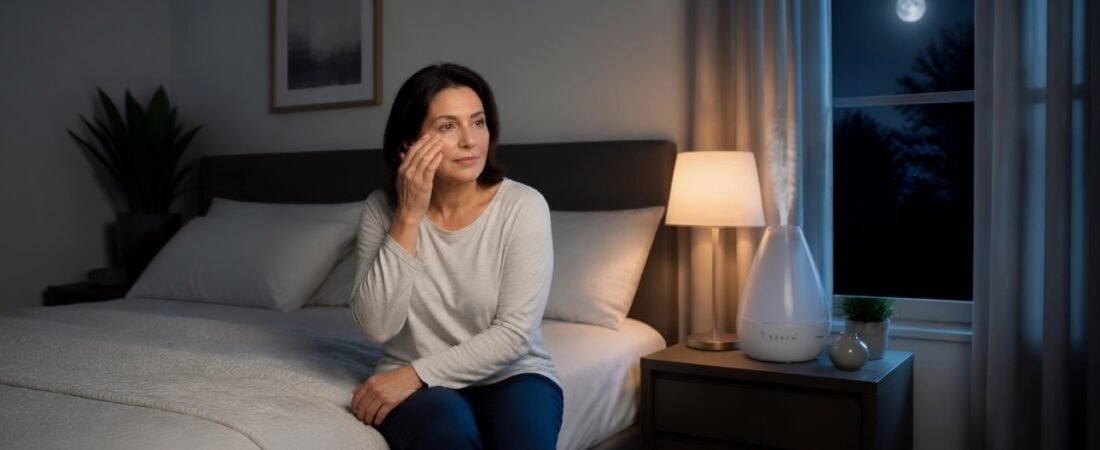
Dry eyes at night can feel different from ordinary tired eyes. Some people notice burning or grittiness while getting ready for bed. Others wake during the night or in the morning with redness, blurred vision, or the sensation that something is stuck in the eye.
Dry eyes at night do not have one universal cause. Dry eye can develop when the eyes do not make enough tears, when tears evaporate too quickly, or when the tear film does not work properly. Bedroom conditions and the way the eyelids close during sleep can also make symptoms more noticeable.
This article explains common reasons for dry eyes at night, practical steps that may help, and signs that deserve an eye examination.
This article provides general health information and is not a substitute for professional medical advice, diagnosis, or treatment.
What Dry Eyes at Night May Feel Like
According to the National Eye Institute, dry eye symptoms can include:
- A scratchy or gritty feeling
- Burning or stinging
- Redness
- Sensitivity to light
- Blurred vision
Watery eyes can also occur. This may sound contradictory, but irritation can sometimes trigger reflex tearing without correcting the underlying tear-film problem.
Symptoms that appear mainly at bedtime or after waking may offer clues about the cause, but timing alone cannot provide a diagnosis.
Why Do My Eyes Get Dry at Night?
1. Dry Bedroom Air and Direct Airflow
For people with dry eyes at night, air conditioning, heating, fans, and low indoor humidity can speed up tear evaporation. A fan or vent pointed toward the face may be especially irritating. The National Eye Institute recommends avoiding wind and direct air conditioning when possible and using a humidifier if indoor air is too dry.
2. Eyelids That Do Not Close Completely During Sleep
Some people sleep with one or both eyelids partly open, a condition called nocturnal lagophthalmos. Even a small opening can leave part of the eye exposed to air for hours. The American Academy of Ophthalmology notes that this exposure can dry the eyes overnight.
A person may not know this is happening. Morning dryness, irritation that is worse in one eye, or symptoms noticed by a sleeping partner may be reasons to ask an eye doctor to evaluate eyelid closure.
3. An Unstable Tear Film
Healthy tears contain water, oils, and mucus that work together to protect the eye’s surface. Dry eye can occur when the eyes make too few tears, tears evaporate too quickly, or the tear film is poor quality.
Problems involving the oil-producing glands along the eyelids may allow tears to evaporate faster. Blepharitis, which causes inflammation and buildup around the eyelashes, can also interfere with the tear film.
4. Medicines and Health Conditions
Some allergy medicines, sleeping pills, diuretics, beta blockers, and other medicines may contribute to dryness. Autoimmune disease, diabetes, thyroid problems, hormonal changes, and previous eye surgery can also play a role.
Do not stop a prescribed medicine on your own. If symptoms began after starting or changing a medicine, discuss the timing with the prescribing clinician and an eye care professional.
5. A Leaking CPAP Mask
A continuous positive airway pressure (CPAP) machine is important treatment for sleep apnea, but a poorly fitting mask may direct leaking air toward the eyes. Cleveland Clinic explains that this airflow can contribute to dryness and morning redness.
Do not stop using prescribed CPAP therapy because of eye symptoms. Ask the sleep-care team to check mask fit and possible air leaks.
6. Daytime Strain That Remains Noticeable at Bedtime
Long periods of screen use reduce blinking, and contact lenses can contribute to dry eye in some people. Symptoms may build during the day and become most obvious at night. Contact lenses should be removed before sleep unless an eye care professional has specifically prescribed overnight wear.
What May Help Dry Eyes at Night?
The best approach depends on the cause. The following steps may reduce common environmental triggers and help protect the eye’s surface.
Adjust Bedroom Airflow
Move fans and vents so that air does not blow directly across the face. If the room is very dry, a properly cleaned humidifier may help. Smoke and other airborne irritants can also make symptoms worse.
Consider Lubricating Eye Products
Artificial tears are a common first treatment for mild dry eye. Moisturizing gels and ointments may last longer than ordinary drops, although thicker products can temporarily blur vision. An eye care professional can help determine which form is appropriate, especially when symptoms occur mainly overnight.
If artificial tears are needed more than four times a day, ask whether a preservative-free product would be more suitable. Preservatives in some multidose bottles can irritate sensitive eyes when used frequently. Follow the product directions, keep the bottle tip clean, and never share eye drops.
Avoid relying on drops marketed mainly to “get the red out.” Redness-relief drops are not the same as lubricating artificial tears and may cause additional irritation when overused.
Address Eyelid and Tear-Film Problems
Warm compresses and gentle eyelid hygiene are sometimes recommended for blocked eyelid glands or blepharitis, but the correct routine depends on the condition. Ask an eye care professional before beginning a new eyelid treatment, particularly if the eye is painful, swollen, or producing discharge.
If the eyelids remain partly open during sleep, an eye doctor may recommend a nighttime ointment, moisture protection, or another treatment. Do not tape the eyelids shut without professional guidance because an incorrect method could injure the eye.
Review Contact Lenses, Medicines, and CPAP Equipment
Persistent symptoms may improve only after the underlying trigger is addressed. An eye examination can help determine whether contact lenses, a medicine, eyelid closure, a CPAP leak, or another condition is contributing.
When Should You See an Eye Doctor?
Arrange an eye examination when dry eyes at night persist, repeatedly disrupt sleep, require frequent drops, affect only one eye, or cause recurring redness or blurred vision. An eye doctor can examine the tear film, eyelids, cornea, and the amount and quality of tears.
Seek prompt medical care for severe eye pain, a sudden change in vision, marked light sensitivity, significant redness, injury, pus-like discharge, or symptoms that develop while wearing contact lenses. Severe untreated dry eye can sometimes damage the cornea.
Frequently Asked Questions
Why Are My Eyes Dry Only at Night?
Nighttime-only symptoms may be related to dry room air, direct airflow, a CPAP leak, incomplete eyelid closure, or tear-film problems that become more noticeable after a full day of screen use or contact lens wear. An examination is needed to determine the specific cause.
Can Sleeping With My Eyes Partly Open Cause Dry Eye?
Yes. Even a small opening between the eyelids can expose the eye’s surface to air during sleep and lead to morning dryness, burning, redness, or blurred vision.
Are Nighttime Gels or Ointments Better Than Artificial Tears?
They are thicker and may remain on the eye longer, but they can blur vision temporarily and are not the right choice for everyone. Ask an eye care professional which type of lubricant is appropriate for your symptoms.
Can a Fan Make Dry Eyes Worse at Night?
Yes. Continuous airflow can increase tear evaporation. Redirecting the fan away from the face is a simple first step.
Why Is One Eye Drier Than the Other at Night?
Sleeping position, airflow, eyelid closure, or a condition affecting one eye may create uneven symptoms. Persistent one-sided dryness should be evaluated rather than assumed to be harmless.
The Bottom Line
Dry eyes at night may result from dry indoor air, direct airflow, tear-film problems, medicines, contact lenses, a leaking CPAP mask, or eyelids that do not close completely during sleep. Simple environmental changes and appropriate lubricating products may help, but repeated or severe symptoms deserve an eye examination. Identifying the cause is more useful than repeatedly treating the discomfort without knowing why it occurs.