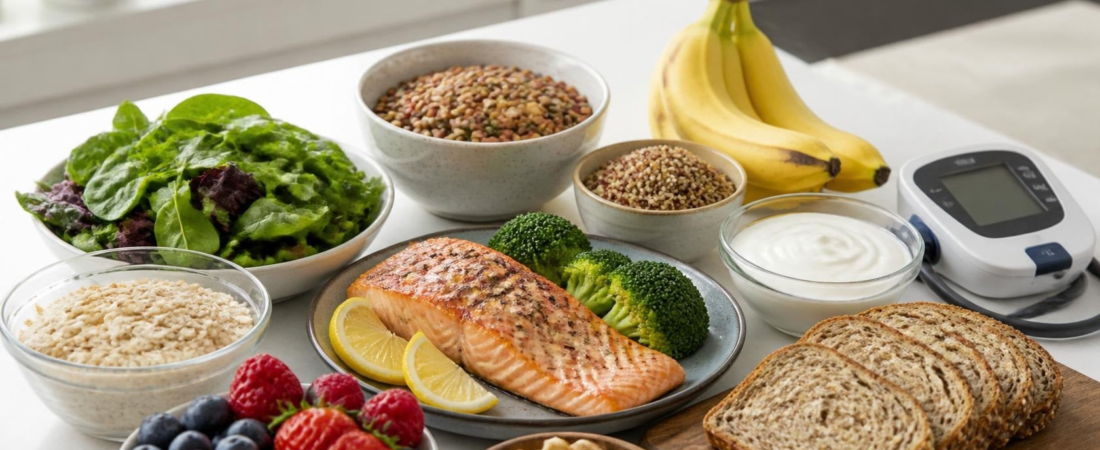
A high blood pressure diet can help support healthier blood pressure and reduce the risk of heart disease, stroke, kidney disease, and other serious health problems. High blood pressure, also called hypertension, is a common condition that is influenced by food choices, body weight, physical activity, genetics, sleep, and other health factors.
What Causes High Blood Pressure?
For most people, high blood pressure does not have one single identifiable cause. This common form is called primary hypertension, and it usually develops gradually over many years.
Factors that may contribute include:
- Age
- Family history
- Excess body weight
- Physical inactivity
- A diet high in sodium and processed foods
- Low potassium intake
- Smoking
- Excessive alcohol consumption
- Poor sleep
- Long-term stress
- Diabetes or high cholesterol
Eating too much sodium may cause the body to retain more fluid, which can increase pressure inside the blood vessels. Potassium helps the body balance sodium, although people vary in how strongly their blood pressure responds to salt.
Some people have secondary hypertension, which is caused by another health condition or certain medications. Possible causes include kidney disease, sleep apnea, hormonal disorders, pregnancy-related conditions, and some prescription or over-the-counter medicines.
In these cases, treating the underlying cause may be necessary in addition to improving diet and lifestyle habits.
Should Diet Be Adjusted to the Cause?
Most people can benefit from reducing sodium and eating fewer heavily processed foods. However, additional changes may depend on body weight, blood sugar, cholesterol, kidney health, and other medical conditions.
For example:
- People who eat many processed foods should focus on reducing sodium.
- People who are overweight may also benefit from smaller portions and fewer sugary drinks.
- People with diabetes should limit added sugar and refined carbohydrates.
- People with high cholesterol should reduce saturated fat and processed meats.
- People with kidney disease may need special limits on sodium, potassium, protein, or fluids.
This is why a blood pressure diet should consider a person’s overall health, not sodium alone.
What Is the DASH Diet?
DASH stands for Dietary Approaches to Stop Hypertension. It is a balanced eating plan developed to help prevent and manage high blood pressure.
The DASH eating plan emphasizes:
- Vegetables
- Fruits
- Whole grains
- Beans and lentils
- Nuts and seeds
- Fish and lean poultry
- Low-fat or fat-free dairy products
- Foods lower in sodium and saturated fat
It limits processed meats, fatty meats, high-fat dairy products, sweets, sugary drinks, salty snacks, and heavily processed foods.
The FDA recommends that adults consume less than 2,300 milligrams of sodium per day. This includes sodium from packaged foods, restaurant meals, sauces, snacks, cooking, and salt added at the table.
The standard DASH eating plan also uses a daily sodium limit of 2,300 milligrams. Reducing sodium to about 1,500 milligrams per day may provide additional blood pressure benefits, especially for people with high blood pressure or greater sensitivity to sodium.
For most adults, keeping sodium below 2,300 milligrams per day and reducing heavily processed and salty foods is a practical place to start.
A high blood pressure diet does not require expensive or unusual foods. Simple changes such as cooking more meals at home, choosing fresh or frozen vegetables, buying unsalted nuts, and comparing sodium levels on food labels can make a meaningful difference. Reducing sodium gradually can also help the taste buds adjust, making lower-sodium meals easier to enjoy over time.